quinta-feira, 29 de junho de 2017

Três projetos de lei sobre hepatites tramitam na Câmara dos Deputados

Levantamento de projetos de lei (PL) em tramitação na Câmara dos Deputados encontrou apenas três PL com a temática das hepatites virais.

Na Assembleia Legislativa do Estado de São Paulo (Alesp), não foram encontrados projetos relevantes envolvendo a temática.

O levantamento foi feito nos sites oficiais de ambas casas legislativas.

Segundo Rodrigo Pinheiro, presidente do Fórum das ONG/Aids do Estado de São Paulo (FOAESP), o levantamento teve por objetivos “avaliar a possibilidade de propor a discussão por meio de audiências públicas e da proposição de novos projetos, que contemplem as demandas atuais”.

Confira abaixo os projetos em tramitação na Câmara dos Deputados:

PL 7651/2014 – Dispõe sobre a proibição de toda e qualquer forma de discriminação aos portadores de Hepatites Virais, em especial os portadores de Hepatite C.
Autoria: Deputada Maria Lucia Prandi – PT/SP
Situação: Pronto para pauta na Comissão de Seguridade Social e Família (CSSF).

PL 3870/2015 – Institui o Julho Amarelo, a ser realizado a cada ano, em todo o território nacional, no mês de julho, quando serão efetivadas ações relacionadas à luta contra as hepatites virais.
Autoria: Deputado Marcos Reategui – PSC/AP
Situação: Pronto para pauta na Comissão de Constituição, Justiça e Cidadania (CCJC).

PL 7628/2014 –
Acrescenta inciso ao Art. 20 da Lei nº 8.036, de 11 de maio de 1990, para autorizar a movimentação da conta vinculada do Fundo de Garantia do Tempo de Serviço (FGTS) quando o trabalhador ou qualquer de seus dependentes for portador das formas crônicas das hepatites B ou C.
Autoria: Deputado Dr. Jorge Silva – PROS/ES
Situação: Apensado ao PL 5356/2013.

Na busca feita pelo FOAESP, foram identificadas frentes parlamentares, tanto no Congresso Nacional, esta coordenada pelo deputado federal Marcos Reategui (PSD-AP), quanto na Alesp, coordenada pelo deputado estadual Carlão Pigmatari (PSDB).

“Vamos marcar reunião com os coordenadores destas frentes e fazê-las caminhar”, afirma Rodrigo Pinheiro.

Three bills are on the rule at the House of Representatives

The survey on bills on the rule at the House of Representatives has brought, as result, only three bills involving Viral Hepatitis Awareness.

Survey datas at the São Paulo State Congress, ALESP, have not found any bill on that specific topic.

The research has been done over both Chamber websites, National and State ones.

According to Rodrigo Pinheiro, president of the State of São Paulo Forum on NGO/AIDS, the surveillance data aimed “to verify open discussions through public hearings and to submit other bills in order to fulfill the current demands”.

See below the bills under consideration at the House of Representatives:

PL 7651/2014 – Sets forth banning any form of prejudice against Viral Hepatitis carriers, first and foremost against those ones who carry Hepatitis C.
Sponsor: Deputada Maria Lucia Prandi – PT/SP
Status: Ready to be discussed at the Committee on Social Security and Family .

PL 3870/2015 –
Sets the campaign named “Yellow July” on the national calendar program. The bill proposes an awareness campaign against Viral Hepatitis, every year, during the months of July.
Sponsor: Deputado Marcos Reategui – PSD/AP
Status: Ready to be discussed at the Committee on Constitution, Justice and Citizenship (CCJC).

PL 7628/2014 –
Adds item to article 20 of law n° 8.036, adopted on May 11th, 1990, in order to give permission to the employers to use resources from their FGTS account (Brazilian Employee’s Severance Guarantee Fund) whether the person, or any of the person’s dependant, carries chronic Hepatitis B or C.
Sponsor: Representative Dr. Jorge Silva – PROS/ES
Status: Attached to the bill 5356/2013.

Researches helded by FOAESP has found three Parliamentary Fronts, both the National Congress, coordinated by the Federal representative Marcos Reategui (PSD-AP), and the State Congress, coordinated by the State representative Carlão Pigmatari (PSDB).

“We will schedule meetings with the Parliament Front coordinators in order to push common interests through both Chambers”, affirms Rodrigo Pinheiro.

sexta-feira, 16 de junho de 2017

Julho Amarelo avança na Câmara dos Deputados

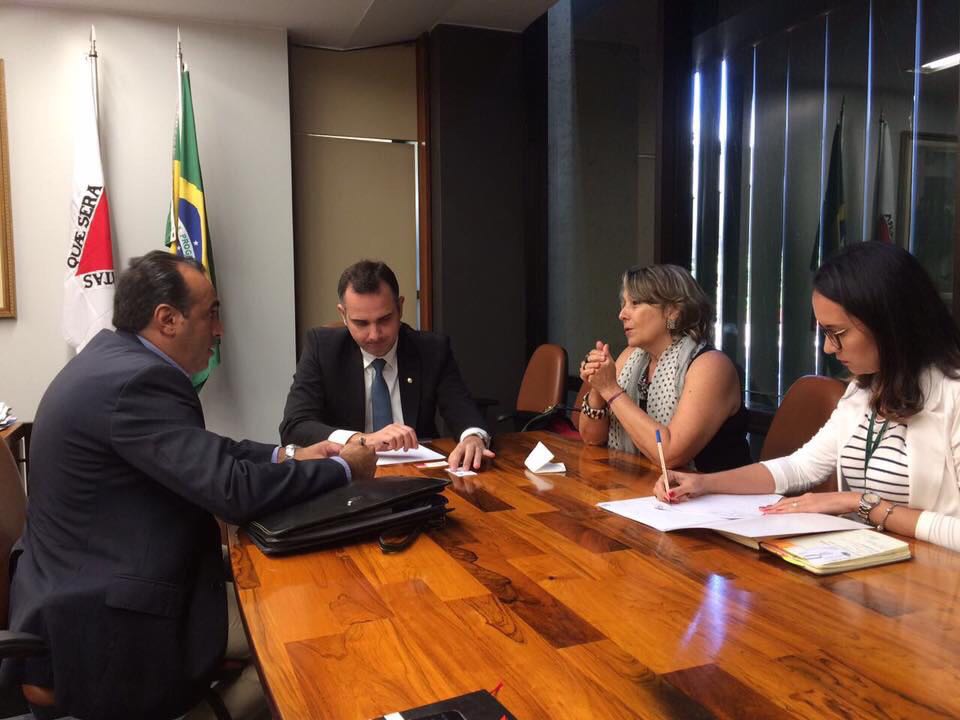
Rodrigo Pinheiro em reunião com o deputado Rodrigo Pacheco
e a deputada Erika Kokay, na CCJC
O Projeto de Lei Nº 3870/2015, que institui o Julho Amarelo, avança na Câmara dos Deputados. A deputada Erika Kokay (PT-DF) apresentou em 14 de junho voto favorável à Comissão de Constituição de Justiça (CCJC) para aprovação do Projeto de Lei (PL).

Em abril, o presidente do Fórum das ONG/Aids do Estado de São Paulo, Rodrigo Pinheiro, participou de reunião (na foto) com a deputada Erika Kokay e o deputado Rodrigo Pacheco (PMDB-MG), presidente da Comissão de Constituição e Justiça e Cidadania (CCJC) da Câmara, em que foi definida a relatoria do PL à deputada.

“Sensibilizamos o presidente da CCJC e indicamos a deputada Erika para a relatoria. Esse advocacy foi importante para que o deputado considerasse a relevância das ações do Julho Amarelo e definisse a relatora para que o projeto tivesse andamento na comissão”, esclarece Pinheiro. A CCJC recebeu o PL em novembro de 2016.

Definida a relatoria – em 27 de abril –, o Regimento da Câmara estabelece o prazo de cinco sessões para que parlamentares da comissão apresentem emendas ao projeto. Vencidos estes prazos, a relatora apresentou seu parecer favorável. Nele, a deputada diz que o PL traz tema sobre a “proteção e defesa da saúde”, entre pontos regimentais.

De autoria do deputado Marcos Reategui (PSC-AP), o Julho Amarelo prevê “ações relacionadas à luta contra as hepatites virais”, durante todos os meses de julho, em todo o território nacional.

Yellow July is moving on at the House of Representatives

Rodrigo Pinheiro in meeting with
representatives Erika Kokay and Rodrigo Pacheco
The bill N° 3870/2015 which proposes “Yellow July” pulls on at the Chamber. The representative Erika Kokay (PT-DF) presented, on June 14th, a favourable vote in order to make eligible the authored measure, placing it on second reading at the Committee on Constitution, Justice and Citizenship (CCJC).

Last April, the president of the State of São Paulo Forum on NGO/Aids, Rodrigo Pinheiro, gathered (at the illustration) with representatives Erika Kokay and Rodrigo Pacheco (PMDB-MG), who is the Chairman of the CCJC, when it was decided to nominate Mrs. Kokai as the committee Speaker.

"We have made the Chairman of CCJC aware of the importance of Yellow July and suggested representative Erika Kokay as the commitee Speaker. This advocacy action was substantial as it made the Chairman aware of how important the proposal is, convincing him about the Speaker nomination, in order to pull on the bill at the Chamber, keeping it alive for the second reading.". The author drafted the bill in November of 2016.

Once the Committee Report was defined on April 27th, the rule of the House gave five sessions as time limit on the consideration of amendments and proposals. After the deadline, the Committee Speaker decided the bill could go to second reading.

In the sentence, the representative explains that the bill “supports the idea of healthcare security harmonisation”.

Authored by Marcos Reategui, representative from (PSD-AP), the bill named “Yellow July “ has been drafted, “making actions towards Viral Hepatitis Awareness” every month of July, at the national territory.

segunda-feira, 8 de maio de 2017

Necessidade de levantamento da hepatite C entre pessoas que vivem com HIV

NOTA FOAESP

Necessidade de levantamento da hepatite C entre pessoas que vivem com HIV

O Fórum das ONG/Aids do Estado de São Paulo vem, por meio desta nota, manifestar a respeito da necessidade urgente de levantamento da presença de hepatite C entre pessoas que vivem com HIV.

O atual protocolo de tratamento da hepatite C contempla todas as pessoas com HIV, independentemente do estado da fibrose do fígado. Em caso da coinfecção, a evolução da hepatite C pode ser muito mais rápida, necessitando de cuidados ágeis a fim de evitar possíveis complicações ou morte dos pacientes.

No Estado de São Paulo, onde são tratados mais da metade dos casos no Brasil, não se tem uma ideia exata da presença da Hepatite C entre as Pessoas Vivendo com HIV/AIDS (PVHA), e a necessidade de levantamento desta realidade é crucial para a qualidade de vida dos pacientes, pois poderá indicar a necessidade de início de tratamento específico, o que amenizará os possíveis danos e poderá refletir em cura e superação mais rápidas.

Desta forma entendemos que é urgente que se invista em divulgação e testagem das pessoas com HIV, dentro dos serviços, a fim de localizar a presença da hepatite C. O custo da realização deste exame não é alto e sua detecção precoce ajudará numa qualidade de vida melhor, visto que a taxa de prevalência é maior entre pessoas com mais de 40 anos.

Lembramos ainda que está aberta, até dia 13 de abril, uma consulta pública junto a Comissão Nacional de Incorporação de Tecnologias no SUS (Conitec), sobre o Protocolo Clínico e Diretrizes Terapêuticas para Hepatite C e Coinfecções. Por isso, é importante que essa discussão consiga garantir este acesso de informação e que, também, amplie as possibilidades de tratamento, especialmente as que possuem fibrose nível 2.

Rodrigo Pinheiro
Presidente

_________________________


RESPOSTA do Ministério da Saúde

Ofício nº 511/2017/DDAHV/SVS/MS
Brasília, 2 de maio de 2017.

À Sua Senhoria o Senhor
Rodrigo Pinheiro
Presidente do Fórum das ONG/Aids do Estado de São Paulo

Assunto: Levantamento da presença de hepatite C entre pessoas que vivem com HIV.

Prezado Senhor,

1. O Ministério da Saúde, por meio da Secretaria de Vigilância em Saúde e do seu Departamento de Vigilância, Prevenção e Controle das IST, Aids e Hepatites Virais (DIAHV), tem como uma das prioridades a incessante busca de informações que permitam identificar como as hepatites virais têm acometido pessoas que vivem com HIV/AIDS. Para a obtenção de informações que permitam elaborar a melhor e mais eficaz resposta para os casos de coinfecção, este departamento vem empreendendo diversas ações de investigação e pesquisa, algumas das quais encontram-se em fase de consolidação de dados que evidenciem especificamente esta questão.

2. Em 2016, o DIAHV concluiu a coleta de dados de três grandes pesquisas utilizadas para o monitoramento da prevalência do HIV/aids, da sífilis e das hepatites virais, bem como de comportamentos, atitudes e práticas associadas ao risco de infecção:
* Estudo epidemiológico sobre a prevalência da infecção de sífilis, do HIV, das hepatites “B”, “C” e fatores comportamentais associados em conscritos das forças armadas, 8ª edição; estudo desenvolvido de julho a dezembro de 2016, com apoio técnico-científico do DIAHV e coordenação da Dra. Rosa Dea Sperhacke da Universidade de Caxias do Sul/RS.
* Duas pesquisas de prevalência do HIV, sífilis e hepatite B e C em Homens que Fazem Sexo com Homens e Mulheres Profissionais do Sexo nos municípios de Belém/PA, Belo Horizonte/MG, Brasília/DF, Campo Grande/MS, Curitiba/PR, Fortaleza/CE, Manaus/AM, Porto Alegre/RS, Recife/PE, Rio de Janeiro/RJ Salvador/BA e São Paulo/SP, com o apoio técnico e financeiro do Ministério da Saúde e coordenação geral [da] Dra. Ligia Regina Franco Sansigolo Kerr da Universidade Estadual do Ceará (UECE) e Dra. Célia Landman Szwarcwald da Fundação Oswaldo Cruz (FIOCRUZ), respectivamente.

3. No âmbito do PROADI-SUS o DIAHV apoiou os projetos intitulados Qualificação da Rede de Cuidados DST, HIV/Aids e Hepatites Virais em Regiões Prioritárias dos Estados de Santa Catarina e São Paulo que visa qualificar as redes de serviços de saúde envolvidas no cuidado em promoção, prevenção e tratamento de infecções sexualmente transmissíveis, HIV, hepatites virais B e C em regiões de saúde prioritárias dos Estados de Santa Catarina e São Paulo.

4. Reuniões Técnicas de Pesquisa:
* Em 2016, foi realizada reunião técnica com a participação a comunidade científica e membros da sociedade civil, para o levantamento de prioridades de pesquisa para o biênio 2017-2018, com vistas a promover o fomento à pesquisa e o desenvolvimento tecnológico em IST, HIV e Hepatites Virais.

5. Em 2017, encerrar-se-á
* A pesquisa de prevalência do HIV, sífilis e hepatite B e C entre Travestis e Transexuais, esta coordenada pelo Dr. Francisco Inacio Pinkusfeld Monteiro Bastos e Dra. Monica Siqueira Malta, ambos da FIOCRUZ.

6. Dentre as ações de vigilância e cuidado, este Departamento disponibilizou uma versão atualizada do Formulário de Solicitação de Medicamento – Tratamento. Agora o campo 11 inclui a possibilidade de informar sobre pacientes coinfectados – com as opções de hepatite B, hepatite C, e tuberculose. As informações geradas nesse campo irão permitir um melhor e mais completo acompanhamento clínico das pessoas vivendo com HIV/aids, além de contribuir para melhorar o processo de aquisição de medicamentos e as ações de vigilância.

7. Acesso o formulário com a alteração http://bit.ly2pdcWXb, página do SICLOM Gerencial: http://azt.aids.gov.br/. Ações de testagem continuam sendo efetivadas.

Cordialmente,
ADELE SCHWARTZ BENZAKEN
Diretora

Urgency of surveying Hepatitis C among people living with HIV

FOAESP MEMORANDUM

Urgency of surveying Hepatitis C among people living with HIV
 

The State of São Paulo Forum on NGO/AIDS (FOAESP) urges through this memorandum the necessity of screening Hepatitis C among people living with HIV.

The current Hepatitis C treatment protocol looks at every HIV-positive individual, no matter what the liver fibrosis stage is. In the case of coinfection, Hepatitis C disease may advance faster among HIV-positive individuals, requiring extra care and attention in order to avoid potential complications or even death.

In the state of São Paulo, a place where more than half of the sick population is treated, the amount of coinfected individuals suffering from both diseases, such as Hepatitis C and HIV/AIDS (PVHA), is unknown.  Therefore it is crucial to obtain accurate database in order to treat the infected individuals and offer an increased quality of life. If successful, the above-mentioned information will allow the infected population opportunities to undergo specific treatments, suffer less, and may result in the possibility of enhanced treatment and ultimately a cure if available.

Based on the information above, we can conclude the urgency and need of HIV seropositive individuals’ Hepatitis C tests in addition to Hepatitis C test announcements at HIV health service locations.  This will allow our communities to detect the presence of the Hepatitis C virus among those individuals affected. The cost of the the test is not expensive and early desease detection will help affected populations have better life conditions, considering that the disease is more prevalent among those who are 40 years old or older.

As a reminder, a public consultation sponsored by the National Committee for Technology Incorporation at SUS – Brazilian public health service system (CONITEC) will take place until April 13th and will discuss Clinical Protocol and Therapeutic Guidelines for Hepatitis C and coinfections.

It is imperative that this topic be given the fullest extent of consideration and dissemination in order to raise treatment possibilities, mostly among fibrosis 2 stage people.

Rodrigo Pinheiro
President

______________


Answer from the Ministry of Health

Office nº 511/2017/DDAHV/SVS/MS
Brasília, May 2nd 2017.

The Honorable Rodrigo Pinheiro, President of The State of São Paulo Forum on NGO/AIDS.
Subject: Surveying presence of Hepatitis C among HIV Seropositive Population

Dear Mr. Pinheiro,

1. The Ministry of Health, through the Secretariat of Health Surveillance and its Department of Surveillance, Control and Prevention of STI, AIDS and Viral Hepatitis (DIAHV), has, as its priorities, an unceasing screeing data base in order to identify how Viral Hepatitis infects HIV-positive population. As an action to obtain database and formulate better and more effective answers to coinfection cases, this Department has promoting several surveys and investigative actions, been some of them in database consolidation phase, getting evidences for this specific subject.

2. In 2016, The DIAHV concluded the database collect from three big surveys used to screen the HIV/AIDS, Syphilis and Viral Hapatitis, as well as habits, attitudes and associated practices with the risks of infection:
* Epidemiological Study about Syphilis, HIV, Hepatitis B and C prevalence and its behavioral factors associated to conscripts of the military, 8th edition; study developed from July to December, 2016, having DIAHV technical and scientific support and Dr. Rosa Dea Sperhacke from Universidade de Caxias do Sul/RS (Caxias do Sul/RS University) coordination.
* Two surveys about HIV, Syphilis and Hepatitis B and C prevalence among men who keep sexual relationship with men and sex worker women at the following Brazilian cities: Belém/PA, Belo Horizonte/MG, Brasília/DF, Campo Grande/MS, Curitiba/PR, Fortaleza/CE, Manaus/AM, Porto Alegre/RS, Recife/PE, Rio de Janeiro/RJ Salvador/BA e São Paulo/SP, with Ministry of Health financial and technical support and Dr. Ligia Regina Franco Sansigolo Kerr from Universidade Estadual do Ceará (UECE) and Dr. Célia Landman Szwarcwald from Fundação Oswaldo Cruz (FIOCRUZ), general coordination.

3. Within the PROADI-SUS the DIAHV supported the entitled projects Maintenance Support for STD, HIV/AIDS and Viral Hepatitis in the prioritarian assistance regions of the States of Santa Catarina and São Paulo, which aims to qualify all health service locations responsible for announcements, prevention and treatment of sexually transmitted infection, HIV, Viral Hepatitis B and C, in prioritarian assistance health regions in the States of Santa Catarina and São Paulo.

4. Technical Research Meetings:

* In 2016, a technical meeting was held involving the presence of the scientific community and civil society in order to discuss research priorities for the biennium 2017-2018, to promote fomentation to researches and technological development for STI, HIV and Viral Hepatitis.

5. The HIV, Syphilis and Hepatitis B and C among Transvestites and Transsexuals prevalence research, one coordinated by Dr. Francisco Inacio Pinkusfeld Monteiro Bastos e Dr. Monica Siqueira Malta, both from FIOCRUZ, will take place until the end of 2017.

6. Among surveillance and health care actions, this Department has made available an updated version of the Medicines- Treatment Form.
From now on, it is included on the 11th fill field, the option to inform possible coinfection with Hepatitis B, Hepatitis C and Tuberculosis.
The database collected by this field will allow a better and more complete clinical follow-up among HIV-postive population, besides contributing to support medicines purchase and surveillance actions.

7. Updated form access http://bit.ly2pdcWXb, page founded in SICLOM Gerencial: http://azt.aids.gov.br.
The Testing Actions still been realised.

Sincerely,
ADELE SCHWARTZ BENZAKEN
Director 

Protocolo Clínico e Diretrizes Terapêuticas para Hepatite C e Coinfecções O Protocolo Clínico e Diretrizes Terapêuticas para Hepatite C ...